

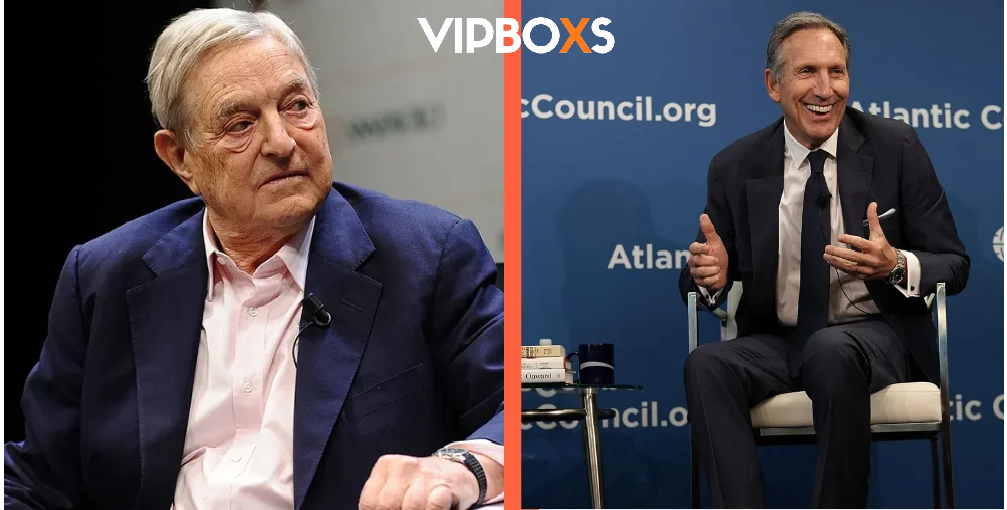
Why these two names keep appearing together
Howard Schultz, the former Starbucks chief executive, and George Soros, the veteran hedge fund investor and Democratic megadonor, do not run in the same orbit day to day. Yet their names have been linked repeatedly over the past decade, usually when corporate boardroom battles or American politics have drawn them onto the same stage. There is no single breaking story uniting them today, but the pattern of their intersections says a good deal about how business and political influence overlap in the United States.
Who is Howard Schultz?
Schultz, now in his seventies, built Starbucks from a handful of Seattle coffee shops into one of the world’s most recognisable retail brands. He first joined the company in 1982, took over as chief executive in 1987, and returned to the role on two further occasions — most recently in 2022 — when the business needed steadying. Along the way he became one of America’s most outspoken corporate leaders, weighing in publicly on healthcare policy, veterans’ affairs and campaign finance reform. In 2019 he briefly considered an independent run for the US presidency, a move that triggered fierce pushback from within the Democratic Party, which feared he could split the anti-Trump vote. He has since stepped back from frontline politics but remains a fixture in business and philanthropic circles, and is reportedly worth several billion dollars.
Who is George Soros?
Soros, 96, is a Hungarian-born American investor who made his fortune through Soros Fund Management and its flagship vehicle, the Quantum Fund. He is best known in financial history as “the man who broke the Bank of England”, having reportedly earned around a billion dollars by short-selling the pound during the 1992 currency crisis. Over the following decades he redirected much of his wealth into philanthropy and political giving through the Open Society Foundations, which supports civil society, human rights and pro-democracy causes worldwide. He has become one of the largest individual donors to Democratic campaigns in the US, and recent reporting suggests he has already committed more than $100 million to the party’s efforts ahead of the 2026 midterm elections. His son, Alexander Soros, now chairs the Open Society board and has taken an increasingly public role in the family’s political giving.
The J.C. Penney boardroom fight
One of the more concrete points of contact between the two men came in 2013, during a bruising dispute over the future of the struggling retailer J.C. Penney. As activist investor Bill Ackman pushed to oust chief executive Myron Ullman, Schultz — not a Penney shareholder but a high-profile business voice — publicly criticised Ackman’s tactics. Soros, who reportedly held a significant stake in the retailer at the time, was said to have separately told the company’s board that he backed Ullman’s leadership, aligning him with Schultz’s position even though the two were not acting in concert. It remains a rarely-cited episode, but one of the few documented moments where their names appeared in the same breaking story rather than in commentary pieces.
The 2020 presidential speculation
The more consequential overlap came during Schultz’s flirtation with an independent presidential bid. Democratic strategists, wary of a centrist candidate siphoning votes from their eventual nominee, mobilised opposition research operations against him. Groups such as American Bridge 21st Century, which has reportedly drawn financial support from a roster of major Democratic donors including Soros, took aim at Starbucks’ corporate record, including its history of settling employment lawsuits. Schultz was never formally a target of Soros personally, but commentators on the right frequently cast the episode as evidence of Soros-aligned networks working to suppress rival political voices — a narrative that has persisted in opinion writing ever since.
A target of conservative commentary
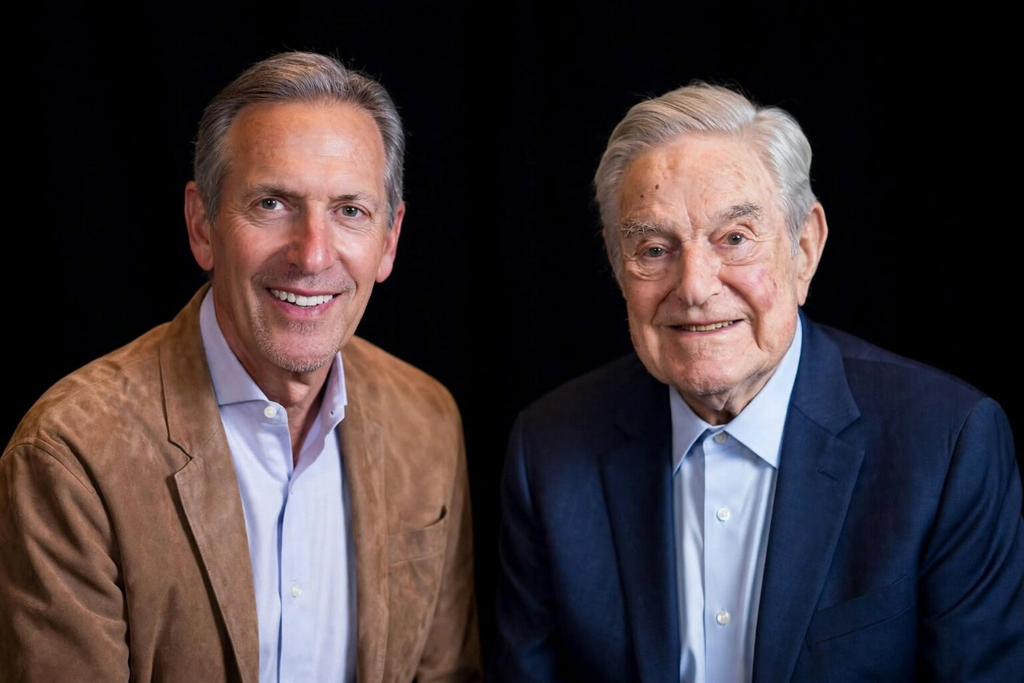
In the years since, a number of opinion pieces — largely from conservative outlets — have urged Schultz to take legal or public action against Soros, blaming Soros-backed criminal justice reform efforts and progressive district attorneys for rising retail crime that reportedly contributed to Starbucks store closures in several US cities. These pieces are opinion journalism rather than news reporting, and there is no indication that Schultz has pursued or seriously considered any such action. Soros, for his part, has not directly addressed Schultz in any on-the-record statement found in recent reporting.
Why the pairing endures
Both men represent, in very different ways, the outsized influence that extremely wealthy individuals can exert on American public life — one through corporate leadership and personal political ambition, the other through decades of strategic philanthropic and electoral giving. Soros has become a frequent lightning rod in conservative media, often blamed for social and political outcomes well beyond his direct involvement, while Schultz has positioned himself as a centrist business figure willing to criticise both parties. Their names surface together less because of any ongoing feud and more because each has become shorthand for a broader argument about money, influence and ideology in American politics.
The bigger picture
As the 2026 midterm campaign intensifies and Soros’s political network reportedly approaches record spending levels, renewed scrutiny of major donors is likely. Whether Schultz re-enters the political conversation remains uncertain, but given their history of being mentioned in the same breath, it would be no surprise if commentators continue to invoke both names whenever debates about corporate power and political money resurface.
Conclusion
Howard Schultz and George Soros are not rivals in any formal sense, nor are they allies. What links them is the recurring way their names surface whenever American commentators look for symbols of outsized private influence over public life — one a retail magnate turned political dabbler, the other a veteran financier turned the Democratic Party’s most prolific individual donor. Their documented interactions, from the 2013 J.C. Penney boardroom dispute to the opposition research mobilised during Schultz’s 2020 presidential flirtation, are fewer and more incidental than the volume of commentary around them might suggest. As political spending ramps up ahead of the 2026 midterms and Soros’s network reportedly approaches new giving records, it is likely their names will continue to be invoked together — less as a genuine rivalry, and more as shorthand for a wider debate about money and influence in American politics.
FAQs
Are Howard Schultz and George Soros business partners?
No. There is no record of the two men having any formal business partnership. Their documented interactions have been limited to separate, sometimes overlapping, public stances on corporate and political matters, most notably the 2013 J.C. Penney leadership dispute.
Did George Soros fund opposition against Howard Schultz’s presidential bid?
Not directly. Groups such as American Bridge 21st Century, which conducted opposition research against Schultz during his 2019–2020 independent run, have reportedly received funding from a range of major Democratic donors, Soros among them. There is no evidence Soros personally directed or financed a campaign against Schultz.
Has Howard Schultz ever responded publicly to criticism involving George Soros?
No on-the-record response from Schultz addressing Soros directly has been found in recent reporting. Calls for Schultz to take action against Soros have come largely from conservative opinion writers, not from Schultz himself.
Is George Soros still active in Democratic politics?
Yes. Reporting from mid-2026 indicates Soros-linked spending has topped $100 million in the current midterm cycle, potentially making him the largest individual donor of the election, continuing a pattern of political giving that dates back decades.
Is Howard Schultz currently involved in politics?
Schultz has largely stepped back from active political ambitions since 2020, though he remains a vocal commentator on business and policy issues. He has not announced any new campaign plans.
Why do these two names keep appearing together in headlines?
Largely because both have become symbols — Soros for progressive political funding, Schultz for centrist corporate activism — in a broader, often polarised conversation about the role of billionaires in shaping American politics and public opinion.
[…] Biles: No Link, Two Big Weeks Aaron Rodgers and Radhakishan Damani: Week’s Big Names Howard Schultz and George Soros: A Decade of Crossed Paths Mike Krieger and Vicki Hollub: Two Leaders, Two Industries Brad Pitt and Greg Hayes: Clearing […]