

Introduction
“thejavasea.me leaks aio-tlp370” has attracted attention among internet users searching for information about online leaks, exposed data, and cybersecurity concerns. The phrase combines a website name, the term “leaks,” and a specific identifier, “AIO-TLP370.” Understanding what these terms mean can help readers distinguish verified information from rumors and recognize the potential risks associated with suspicious websites.
Online leaks have become a significant topic in digital security. Personal information, private documents, account credentials, and other sensitive materials can sometimes appear on websites without the permission of the people or organizations involved. Such incidents can create privacy concerns and expose visitors to scams, malware, and other cybersecurity threats.
However, the presence of a keyword in search results does not establish that a particular leak is authentic. The exact contents, origin, and meaning of AIO-TLP370 should not be assumed without reliable evidence.
This article explores the keyword, explains the broader context of online leaks, discusses potential security risks, and outlines practical steps that internet users can take to protect their information.
What Is Thejavasea.me?
Thejavasea.me is a domain referenced in online searches associated with leak-related terminology. The specific nature of the material connected to the domain cannot be established from the keyword alone, and claims about particular files or datasets require independent verification.
When investigating an unfamiliar website, it is important to consider several factors, including its ownership, reputation, security practices, and the nature of the content it publishes. A website’s name or appearance does not necessarily establish whether it is trustworthy.
Some websites publish legitimate public information, while others may host unauthorized material, misleading downloads, advertisements, or links to potentially harmful files. Users should therefore approach unfamiliar websites cautiously, particularly when the website is associated with leaked or private information.
A responsible investigation should distinguish between confirmed facts, unverified online claims, and speculation. This distinction helps prevent misinformation and reduces the risk of unintentionally spreading false allegations about individuals or organizations.
What Information Could Allegedly Be Involved?

Online discussions about AIO-TLP370 describe it in different ways, with some sources claiming that it involves sensitive digital information. However, the exact contents have not been reliably established through an authoritative public inventory.
In general, leak-related incidents may involve several categories of information.
1. Usernames and Passwords
Exposed login credentials can allow attackers to attempt unauthorized access to email accounts, social media profiles, and online services. The danger becomes greater when people reuse the same password across multiple platforms.
Even old credentials can remain a security concern if users have not changed them.
2. Personal Information
Some data leaks involve names, email addresses, phone numbers, or other identifying details. Such information may be used in phishing campaigns, impersonation attempts, or fraudulent messages.
There is no verified public evidence establishing which specific personal records, if any, are contained in AIO-TLP370.
3. Software and Configuration Files
Other leak-related packages may contain scripts, configuration files, source code, or technical documentation. Depending on their contents, these materials could expose system weaknesses or information that organizations intended to keep private.
These are general possibilities associated with data leaks, not confirmed contents of the AIO-TLP370 package.
4. API Keys and Access Tokens
API keys and authentication tokens can sometimes provide access to software services, databases, or cloud resources. Organizations generally need to store these credentials securely and revoke them if exposure is suspected.
Again, their presence in AIO-TLP370 has not been independently established.
Why Has AIO-TLP370 Attracted Online Attention?
Unusual technical keywords often attract attention because people want to understand whether a new cybersecurity incident has occurred.
Thejavasea.me leaks aio-tlp370 combines a recognizable domain-style name with an unfamiliar technical identifier. This makes the phrase a potential subject of curiosity for technology enthusiasts, cybersecurity readers, and people researching online privacy.
Several factors can contribute to interest in such topics:
- Uncertainty: Readers want to know whether a reported leak is genuine.
- Privacy concerns: People worry about their personal information appearing online.
- Technical terminology: Identifiers such as AIO-TLP370 can sound official even when their meanings are unclear.
- Repeated online coverage: Multiple articles can make a topic more visible in search results.
- Cybersecurity awareness: Users increasingly want to understand digital threats and account protection.
However, widespread discussion is not the same as independent confirmation. Readers should evaluate the quality of the evidence instead of assuming that a frequently repeated claim is necessarily accurate.
Security Risks Associated With Leak-Related Websites
Whether or not AIO-TLP370 contains genuine leaked information, visiting unfamiliar websites or downloading unknown archives can create security risks.
Malware and malicious downloads
Files advertised as leaked databases, software bundles, or private archives may contain malicious programs. Opening them could compromise a device or expose stored information.
Account theft
Stolen or reused credentials may be exploited to gain unauthorized access to online accounts.
Phishing and scams
Suspicious websites may imitate legitimate login pages or request personal information under misleading pretenses.
Privacy exposure
Interacting with questionable websites may expose browsing information or encourage users to submit sensitive details.
These risks are reasons to exercise caution. They do not establish that every website discussing AIO-TLP370 is malicious.
How to Protect Yourself From Potential Data Leaks
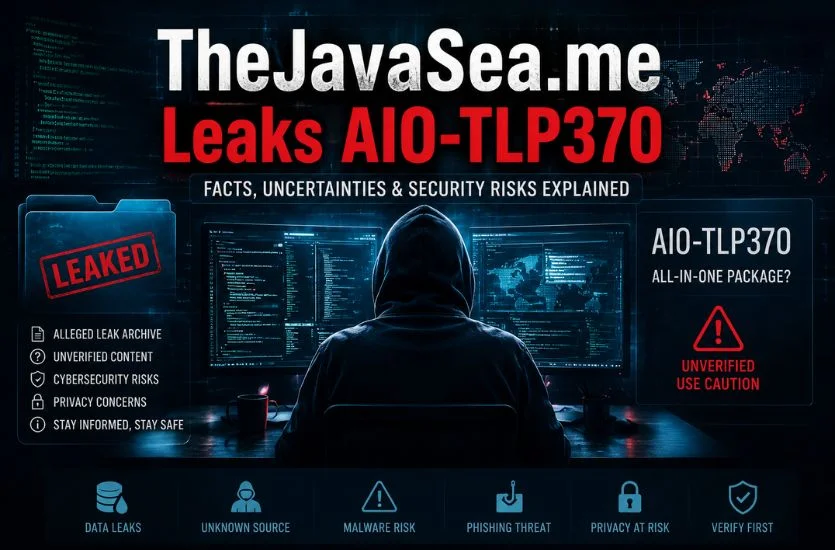
Users do not need to download a suspicious archive to improve their digital security. A few practical precautions can significantly reduce the risk of account compromise.
Use Strong, Unique Passwords
Create a different password for every important online account. A reputable password manager can help you generate and store strong credentials without having to memorize each one.
If you have reused a password that might have been exposed, change it on every service where it was used.
Enable Multifactor Authentication
Multifactor authentication adds an additional verification step beyond a password. Where available, passkeys or authenticator applications are generally preferable to relying solely on passwords.
This extra protection can help prevent unauthorized access even when a password is compromised.
Check for Known Credential Exposure
Use a reputable breach-notification service or your password manager’s security alerts to check whether your email address or credentials appear in known incidents.
Avoid websites that ask you to upload an entire password list or provide your current password just to check for exposure.
Keep Your Devices Updated
Install security updates for your operating system, browser, and applications. Updates frequently address vulnerabilities that attackers might otherwise exploit.
Use trusted security software and avoid opening unexpected attachments or executable files.
Watch for Suspicious Messages
After a reported data leak, remain alert to unexpected password-reset requests, unusual login notifications, and messages that ask you to verify sensitive information.
Do not click suspicious links. Instead, access the relevant service through its official application or by entering its known website address yourself.
Avoid Downloading Unverified Archives
Downloading a package simply to discover what it contains is unnecessary and can introduce avoidable security and privacy risks. Do not redistribute private information or use credentials that belong to other people.
Is Thejavasea.me Leaks AIO-TLP370 a Confirmed Data Breach?
The most important distinction is between an online claim and a verified cybersecurity incident.
Several websites discuss AIO-TLP370, but the available descriptions do not establish a consistent, independently authenticated account of its origin, exact contents, affected organizations, or scale.
A reliable confirmation would ideally come from an affected organization, a recognized cybersecurity research team, an official incident disclosure, or a technically documented investigation.
Without that evidence, claims about exact numbers of affected users, particular companies, specific passwords, or the total size of the alleged dataset should be treated cautiously.
Readers should also remember that a collection of previously exposed information is not necessarily evidence of a new attack. Sometimes old data is repackaged, combined with other material, or given a new label.
The responsible conclusion is that AIO-TLP370 is a leak-related online identifier whose specific claims require further verification.
Frequently Asked Questions (FAQs)
1. What is Thejavasea.me leaks AIO-TLP370?
It is a search phrase associated with an alleged leak-related package or collection. Its precise origin, contents, and relationship to a confirmed security incident remain insufficiently verified.
2. What does AIO-TLP370 mean?
AIO is commonly interpreted as “All-In-One,” while TLP370 appears to be an identifier or label. The exact meaning of the complete term has not been authoritatively established.
3. Is AIO-TLP370 a confirmed data breach?
There is insufficient authoritative public evidence to establish it as a specific, independently verified breach with confirmed victims and contents. Online articles discussing the term do not, by themselves, prove that a breach occurred.
4. Is it safe to download AIO-TLP370 files?
Downloading unknown archives is not recommended. Such files may contain malware, stolen information, or deceptive content. Avoid downloading or distributing suspected leaked material.
5. Could my personal information be affected?
It is possible for personal information to appear in unrelated or previously reported data breaches, but the AIO-TLP370 label alone does not show that your information is involved. Check known exposures using reputable breach-notification services and secure your accounts.
[…] Birla Family Link Richard Liu and Serena Williams: Why Their Names Keep Getting Linked Online Thejavasea.me Leaks AIO-TLP370: Understanding the Term, Online Risks, and Data Security Misha Ezratti’s Wife: What We Know About Jessica Ezratti FintechZoom.io Courses: A Complete […]